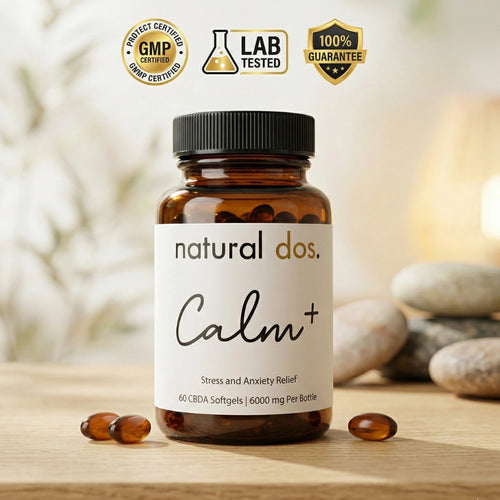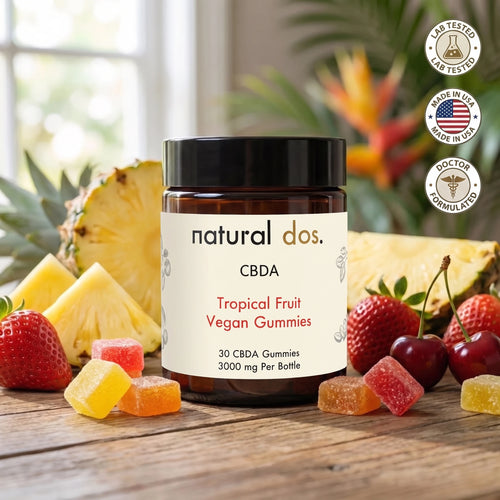
YOU'RE TIRED. BUT YOUR BRAIN HAS OTHER PLANS.

YOU'RE TIRED. BUT YOUR BRAIN HAS OTHER PLANS.

There's a reason melatonin and regular CBD let you down. And there's a reason CBDA doesn't.

100-DAY MONEY-BACK GUARANTEE

100-DAY MONEY-BACK GUARANTEE

Full refund, no questions asked, no return required

THIRD-PARTY LAB TESTED

THIRD-PARTY LAB TESTED

Every batch tested for potency, purity, and contaminants

FREE SHIPPING OVER $70

FREE SHIPPING OVER $70

Ships in 2 business days

FOUNDED BY A PhD AND MD

FOUNDED BY A PhD AND MD

Formulated by Dr. Luigi Bertoli (MD) and Dr. Colin Reily (PhD)

AS SEEN IN

You're not imagining it. Sleep gets harder after 50.

It usually starts the same way. You fall asleep fine — then you're wide awake at 2am, mind running through tomorrow's list, last week's conversation, nothing in particular. Or you never quite fall deeply asleep to begin with. You wake up and it's been six hours, but it doesn't feel like it.

Melatonin

Melatonin

Helped you fall asleep

Morning grogginess

CBD Gummies

CBD Gummies

Did nothing noticeable

No real change

Magnesium

Magnesium

Helped a little

Still waking up

Why most CBD products don't do much for sleep

Standard CBD

Heat is used during production. That heat destroys CBDA — the raw compound in the hemp plant your body actually absorbs. By the time it reaches you, most of the effective compound is already gone.

Natural Dos CBDA

Low-temperature purification preserves CBDA intact. Your body absorbs it over 500% better than standard CBD. You get the compound the way the hemp plant actually made it.

What CBDA actually does

Calms the stress signal

Calms the stress signal

CBDA works with your endocannabinoid system — the network that regulates how your body responds to stress. Less activation at night means your mind isn't running when it should be winding down.

Supports your natural sleep chemistry

Supports your natural sleep chemistry

CBDA activates serotonin receptors that regulate your sleep-wake cycle. Serotonin is what your body uses to produce melatonin naturally — which is why CBDA supports real sleep without the artificial override (and the groggy morning) that comes from melatonin supplements.

No grogginess

No grogginess

It doesn't sedate you. It works with your body's own chemistry to help you fall asleep and stay asleep — so you wake up feeling like you actually rested.

REAL CUSTOMERS

HEAR IT FROM THEM.

Scientific References

NaturalDos™ is not endorsed by, sponsored by, or affiliated with any of these organizations.

ACS Chemistry for Life
British Pharmacological Society
PAIN Journal
Springer
Scientific Reports
Nature Portfolio
1. Formato, M. et al. (2020). Cannabidiolic-Acid (CBDA): A Unique Compound of Cannabis. Molecules, 25(21), 4936.
2. Bolognini, D. et al. (2013). Cannabidiolic acid prevents vomiting in Suncus murinus and nausea-induced behaviour in rats by enhancing 5-HT1A receptor activation. British Journal of Pharmacology, 168(6), 1456–1470.
3. Rock, E.M. et al. (2020). Cannabidiol and cannabidiolic acid reduce nausea and vomiting. Cannabis and Cannabinoid Research, 5(3), 191–198.
4. Takeda, S. et al. (2008). Cannabidiolic acid as a selective cyclooxygenase-2 inhibitory component in cannabis. Drug Metabolism and Disposition, 36(9), 1917–1921.
5. Rock, E.M. et al. (2018). Effect of cannabidiolic acid and ∆9-tetrahydrocannabinol on carrageenan-induced hyperalgesia and edema. Psychopharmacology, 235, 3259–3271.
6. Anderson, L.L. et al. (2019). Pharmacokinetics of phytocannabinoid acids and anticonvulsant effect of cannabidiolic acid in a mouse model of Dravet Syndrome. Journal of Natural Products, 82(11), 3047–3055.
7. Pertwee, R.G. et al. (2018). Cannabidiolic acid methyl ester, a stable synthetic analogue of cannabidiolic acid, can produce 5-HT1A receptor-mediated suppression of nausea. British Journal of Pharmacology, 175(1), 100–112.
8. Zhu, H.J. et al. (2006). Characterization of P-glycoprotein inhibition by major cannabinoids from marijuana. Journal of Pharmacology and Experimental Therapeutics, 317(3), 850–857.
9. Pellesi, L. et al. (2018). European Journal of Clinical Pharmacology: Pharmacokinetics and tolerability of oral cannabis preparations in patients with medication overuse headache.
10. Ujváry, I. & Hanuš, L. (2016). Human metabolites of cannabidiol: A review on their formation, biological activity, and relevance in therapy. Cannabis and Cannabinoid Research, 1(1), 90–101.
11. Rock, E.M. & Parker, L.A. (2013). Effect of low doses of cannabidiolic acid and ondansetron on LiCl-induced conditioned gaping in rats. British Journal of Pharmacology, 169(3), 685–692.
12. Takeda, S. et al. (2014). Down-regulation of cyclooxygenase-2 (COX-2) by cannabidiolic acid in human breast cancer cells. Journal of Toxicological Sciences, 39(5), 711–716.
13. De Petrocellis, L. et al. (2011). Effects of cannabinoids and cannabinoid-enriched Cannabis extracts on TRP channels and endocannabinoid metabolic enzymes. British Journal of Pharmacology, 163(7), 1479–1494.
14. Navarro, G. et al. (2020). Cannabigerol action at cannabinoid CB1 and CB2 receptors and CB1–CB2 heteroreceptor complexes. Frontiers in Pharmacology, 11, 422.
15. Shannon, S. et al. (2019). Cannabidiol in anxiety and sleep: A large case series. The Permanente Journal, 23, 18–041.
16. Suraev, A.S. et al. (2020). Cannabinoid therapies in the management of sleep disorders: A systematic review of preclinical and clinical studies. Sleep Medicine Reviews, 53, 101339.
17. Kesner, A.J. & Lovinger, D.M. (2020). Cannabinoids, endocannabinoids and sleep. Frontiers in Molecular Neuroscience, 13, 125.
18. Murillo-Rodriguez, E. et al. (2006). Anandamide modulates sleep and memory in rats. Brain Research, 1075(1), 108–115.
19. Pacher, P. et al. (2006). The endocannabinoid system as an emerging target of pharmacotherapy. Pharmacological Reviews, 58(3), 389–462.
20. Russo, E.B. (2011). Taming THC: potential cannabis synergy and phytocannabinoid-terpenoid entourage effects. British Journal of Pharmacology, 163(7), 1344–1364.